

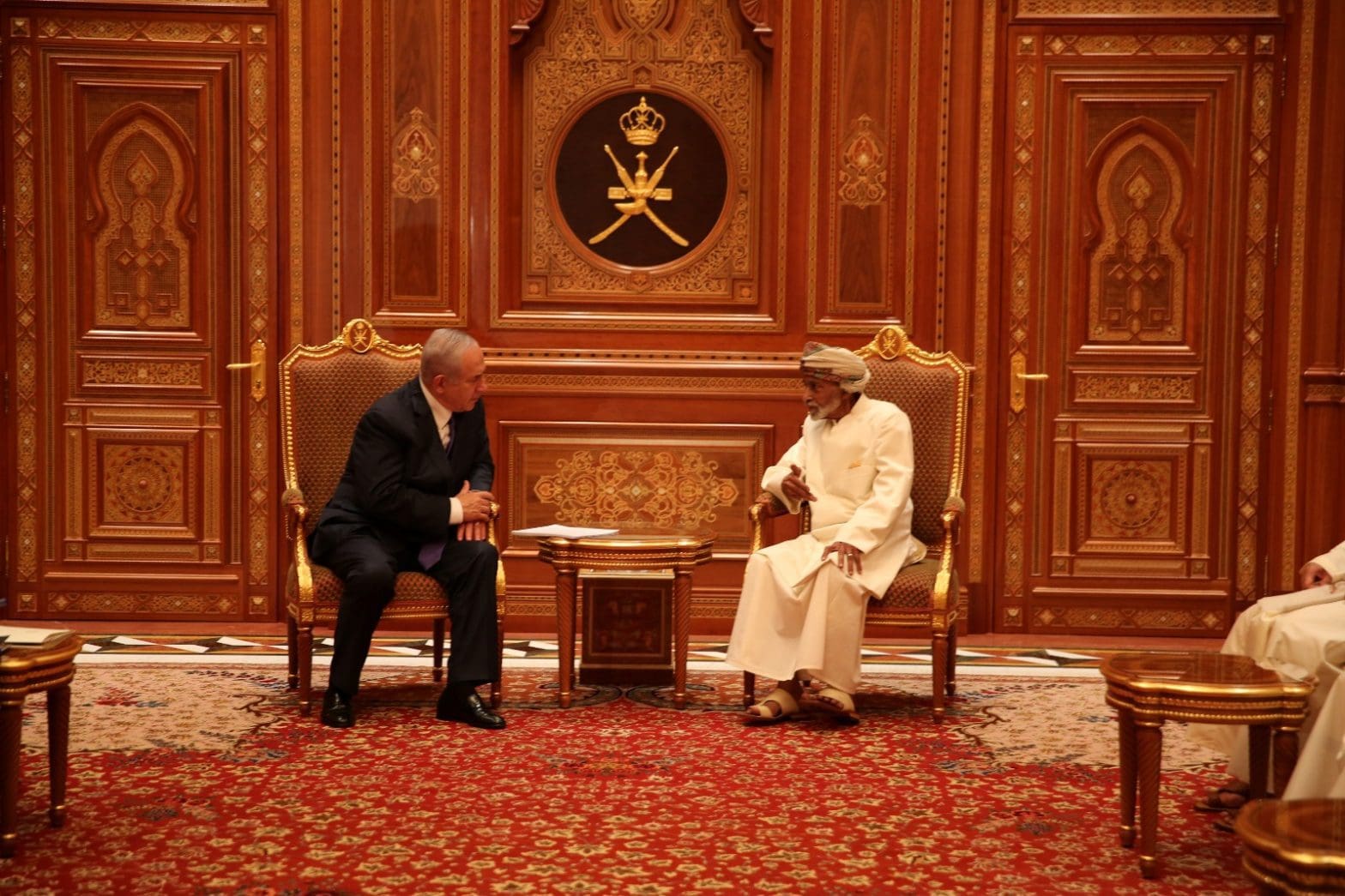

For several years, backchannel ties between Israel and some Gulf Arab states have been developing in the shadows. While Israel is not shy about the relationship, the Gulf states have hoped to keep their rapprochement with Israel under wraps for obvious reasons pertaining to the Israeli-Palestinian conflict. Yet increasing diplomatic exposure has brought the relationship out into the open and signaled possible momentum toward the establishment of formal relations for the first time.
After Israeli Prime Minister Benjamin Netanyahu’s official visit to Oman in October—the first for an Israeli head of state since 1996—he has been vocal in his intentions to build on that by solidifying ties with other states, including Bahrain. The Israeli press even reported, citing the prime minister’s office, that Netanyahu intends to formalize relations with Saudi Arabia ahead of the upcoming Israeli elections, which at the time were slated for November.
While this is likely far-fetched, and cannot be separated from political posturing within Israel, in today’s Middle East it is not difficult to discern the reasons why both sides would court each other. Excessive regional instability and mistrust are heightening tensions between states, especially with adversaries like Iran. The region lacks a collective security framework of any kind, and after nearly two decades of war, America’s appetite for further military engagement in the region has waned, leaving open a considerable security vacuum. Salvaging America’s security commitment is at the heart of the Gulf overture to Israel.
It is worth considering, then, the nature of this relationship for both sides, its relative value, and the possible risks it entails, especially for the Gulf states.